.webp)
Best AI Environmental Monitoring Tools for Smarter Earth Tracking
Right now, in a river you've never heard of, oxygen levels could be quietly dropping and by the time it's visible to the naked eye, the damage is often already done. Pollution and contamination rarely announce themselves loudly. That's exactly why AI has become the environmental world's early-warning system pulling data from satellites, drones, and sensors to track pollution, temperature shifts, and chemical exposure before problems ever become visible. Take River Aware helping governments protect river health and catch issues while they're still small. Here's a look at the AI tools keeping ecosystems one step ahead of disaster.

 Updated: May 14, 2026 | 31 min read
 What Is AI Environmental Monitoring?
AI environmental monitoring is the use of artificial intelligence technologies such as machine learning, computer vision, predictive analytics, satellite imagery, and IoT sensors to monitor, analyze, and manage environmental conditions. These systems continuously collect data from sources like drones, weather stations, and remote sensors, allowing organizations to detect pollution, monitor air and water quality, track emissions, and identify environmental risks in real time.
Quick Comparison Table
| Tool | Best For | Starting Price | Ease of Use | Free Trial |
| Google Earth Engine | Large-scale satellite data analysis & remote sensing | Free (research); Commercial pricing varies | Moderate | Yes |
| FlyPix AI | AI-powered drone & geospatial image analysis | Custom | Easy | Demo Available |
| Clarity Movement | Urban air quality monitoring | Custom | Easy | Contact Sales |
| SafetyCulture | Environmental inspections & workplace compliance | Free plan available | Very Easy | Yes |
| Cleartrace | Carbon accounting & emissions management | Custom | Moderate | Contact Sales |
| Envirosuite | Environmental intelligence & industrial monitoring | Custom | Moderate | Demo Available |
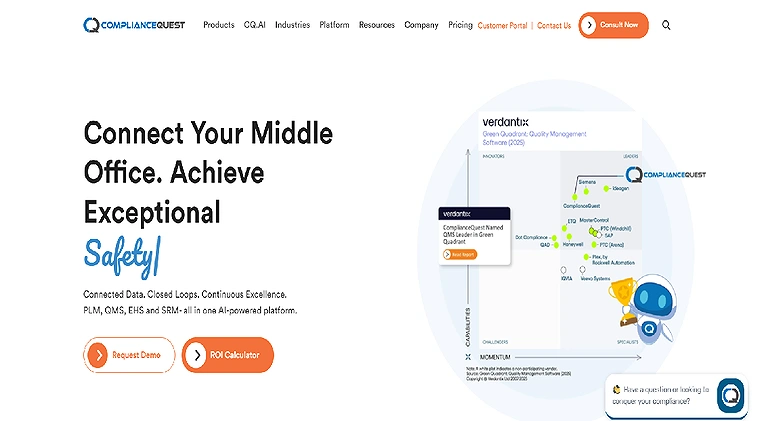
| Cority | Enterprise EHS & environmental compliance | Custom | Moderate | Demo Available |
| SherpaPharma | Pharmaceutical environmental & sustainability compliance | Custom | Moderate | Contact Sales |
| Aeroqual | Air quality monitoring hardware & analytics | Custom | Easy | Contact Sales |
| EarthAI | AI-assisted mineral exploration & geological analysis | Custom | Moderate | Contact Sales |
| Benchmark Gensuite | Enterprise ESG, EHS & sustainability management | Custom | Moderate | Demo Available |
| Quentic | Environmental, health & safety management | Custom | Easy | Demo Available |
| IBM Envizi | ESG reporting & sustainability performance | Custom | Moderate | Demo Available |
| ComplianceQuest | Environmental quality & compliance management | Custom | Moderate | Demo Available |
| Aethair | AI-driven air quality intelligence | Custom | Easy | Contact Sales |
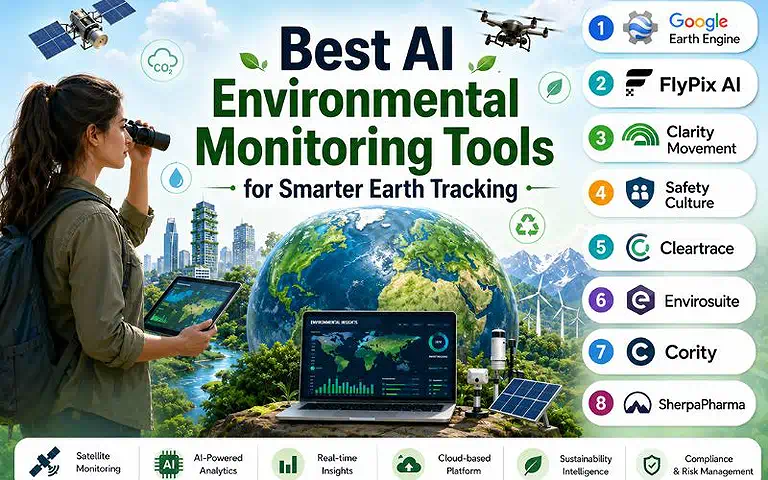
Cover Photo Best AI Environmental Monitoring Tools for Smarter Earth Tracking
Why AI Environmental Monitoring Is Booming in 2026 ?
AI environmental monitoring is booming in 2026 as organizations increasingly rely on intelligent technologies to meet sustainability goals, comply with stricter environmental regulations, and make faster data-driven decisions. By combining AI with satellite imagery, IoT sensors, drones, and predictive analytics, businesses can monitor environmental conditions in real time while reducing manual effort and improving operational efficiency. As environmental challenges continue to grow, AI-powered monitoring has become a strategic investment for organizations seeking smarter, faster, and more sustainable environmental management.
Benefits of AI Environmental Monitoring
Traditional environmental monitoring often depends on manual sampling, periodic inspections, and delayed reporting, making it difficult to respond quickly to environmental changes. AI significantly improves this process by delivering continuous monitoring, automated analysis, and predictive insights.
Some of the key benefits include:
- Real-Time Environmental Monitoring – Continuously analyzes environmental conditions instead of relying on scheduled inspections.
- Early Risk Detection – Identifies pollution events, hazardous emissions, abnormal environmental patterns, and compliance risks before they escalate.
- Predictive Analytics – Forecasts future environmental conditions using historical and live data to support proactive decision-making.
- Improved Regulatory Compliance – Automates environmental reporting and helps organizations meet ESG, ISO 14001, carbon reporting, and industry-specific regulations.
- Reduced Operational Costs – Minimizes manual inspections, field surveys, and repetitive data processing through AI automation.
- Higher Data Accuracy – AI algorithms analyze millions of data points with greater consistency than manual methods.
- Faster Incident Response – Enables organizations to respond quickly to environmental emergencies using real-time alerts and dashboards.
- Enhanced Sustainability Reporting – Supports carbon accounting, emissions tracking, resource optimization, and ESG performance measurement.
- Scalable Monitoring – Easily expands monitoring across multiple facilities, geographic regions, and environmental assets.
- Better Decision-Making – Combines satellite imagery, IoT sensors, weather data, and predictive models into a unified decision-support platform.
How We Selected These AI Environmental Monitoring Tools
To ensure this guide provides practical value for environmental professionals, sustainability teams, researchers, and enterprise organizations, our team evaluated each platform and also gather the the data from the professional users as a consistent set of criteria rather than relying solely on popularity or marketing claims.
Our evaluation focused on the following factors:
| Evaluation Criteria | Why It Matters |
| AI Capabilities | Assessed machine learning, predictive analytics, computer vision, and automation features. |
| Environmental Monitoring Coverage | Evaluated support for air quality, water quality, emissions, climate, satellite monitoring, and sustainability reporting. |
| Ease of Use | Considered user interface, dashboard design, learning curve, and accessibility for different user types. |
| Integration Options | Reviewed compatibility with IoT devices, GIS platforms, APIs, cloud services, ERP systems, and enterprise software. |
| Reporting & Analytics | Compared visualization tools, dashboards, compliance reporting, and data export capabilities. |
| Industry Applications | Examined how well each solution supports industries such as manufacturing, agriculture, mining, energy, healthcare, and government. |
| Scalability | Determined whether the platform is suitable for startups, mid-sized organizations, or enterprise deployments. |
| Pricing Transparency | Considered availability of public pricing, free trials, and overall value for investment. |
| Customer Reputation | Reviewed market adoption, enterprise usage, product maturity, and customer feedback where available. |
Note: No single platform is ideal for every organization. Some specialize in satellite imagery and remote sensing, while others focus on ESG reporting, industrial compliance, workplace safety, or air quality monitoring.
Professional Workflow Stage
| Workflow Stage | Recommended Tools | Primary Purpose |
| Environmental Data Collection | Google Earth Engine, FlyPix AI, Aeroqual | Gather satellite imagery, drone data, and sensor measurements. |
| Air Quality Monitoring | Clarity Movement, Aeroqual, Aethair | Monitor pollutants, particulate matter, and urban air quality. |
| Environmental Intelligence & Analysis | Envirosuite, EarthAI, Google Earth Engine | Analyze environmental trends using AI and predictive models. |
| Carbon & ESG Management | IBM Envizi, Cleartrace | Track greenhouse gas emissions, carbon accounting, and sustainability metrics. |
| Compliance & Risk Management | Cority, ComplianceQuest, Quentic | Ensure regulatory compliance and manage environmental risks. |
| Workplace Inspections & Audits | SafetyCulture, Benchmark Gensuite | Conduct digital inspections, audits, and environmental safety reporting. |
| Pharmaceutical Environmental Compliance | SherpaPharma | Support regulated pharmaceutical manufacturing and compliance processes. |
Platform Compatibility Table
| Tool | Web App | Mobile App | Cloud-Based | API Access | IoT/Sensor Integration |
| Google Earth Engine | ✓ | Limited | ✓ | ✓ | Limited |
| FlyPix AI | ✓ | ✓ | ✓ | ✓ | ✓ |
| Clarity Movement | ✓ | ✓ | ✓ | ✓ | ✓ |
| SafetyCulture | ✓ | ✓ | ✓ | ✓ | ✓ |
| Cleartrace | ✓ | Limited | ✓ | ✓ | ✓ |
| Envirosuite | ✓ | ✓ | ✓ | ✓ | ✓ |
| Cority | ✓ | ✓ | ✓ | ✓ | ✓ |
| SherpaPharma | ✓ | Limited | ✓ | Limited | Limited |
| Aeroqual | ✓ | ✓ | ✓ | ✓ | ✓ |
| EarthAI | ✓ | Limited | ✓ | Limited | Limited |
| Benchmark Gensuite | ✓ | ✓ | ✓ | ✓ | ✓ |
| Quentic | ✓ | ✓ | ✓ | ✓ | ✓ |
| IBM Envizi | ✓ | Limited | ✓ | ✓ | ✓ |
| ComplianceQuest | ✓ | Limited | ✓ | ✓ | ✓ |
| Aethair | ✓ | ✓ | ✓ | ✓ | ✓ |
1 Google Earth Engine
Google Earth Engine is a web-based platform that enables users to study Earth through over 50 years of satellite imagery and global environmental data. It supports monitoring of deforestation, urban growth, climate change, and disasters using cloud computing, machine learning, and data from Landsat and Sentinel satellites for fast analysis, visualization, collaboration, and environmental decision-making.
Key Features
- Provides access to over 50 years of satellite imagery and environmental datasets.
- Supports cloud-based geospatial analysis without requiring powerful hardware.
- Integrates machine learning tools for environmental monitoring and predictions.
- Enables collaboration, visualization, and sharing of research findings online.
How to use Google Earth Engine?
- Sign in using a Google account and open the Earth Engine Code Editor.
- Choose datasets such as Landsat or Sentinel satellite imagery for analysis.
- Use JavaScript or Python APIs to process, visualize, and analyze geospatial data.
- Export maps, charts, and reports for environmental research or decision-making.
Pros
- Offers massive historical satellite data collections in one platform.
- Cloud computing allows fast processing of large datasets.
- Supports advanced analytics, AI, and machine learning workflows.
- Useful for research, disaster management, climate studies, and urban planning.
Cons
- Requires coding knowledge for advanced functionality and analysis.
- Internet connectivity is necessary because the platform is cloud-based.
- Beginners may face a steep learning curve initially.
- Large or complex computations may occasionally face processing limits.
Best Use Case
Google Earth Engine is best for environmental monitoring, climate change analysis, disaster management, deforestation tracking, agricultural studies, and urban growth analysis using satellite imagery and geospatial data.
Limitations
- Limited offline usage due to dependence on cloud infrastructure.
- Advanced customization requires programming skills in JavaScript or Python.
- Commercial-scale projects may require additional cloud resources and quotas.
Pricing Plan
- Free for educational, research, and non-commercial environmental projects.
- Paid enterprise and commercial usage available through Google Cloud services.
Alternative
- ArcGIS
- QGIS
- Sentinel Hub
- NASA Worldview
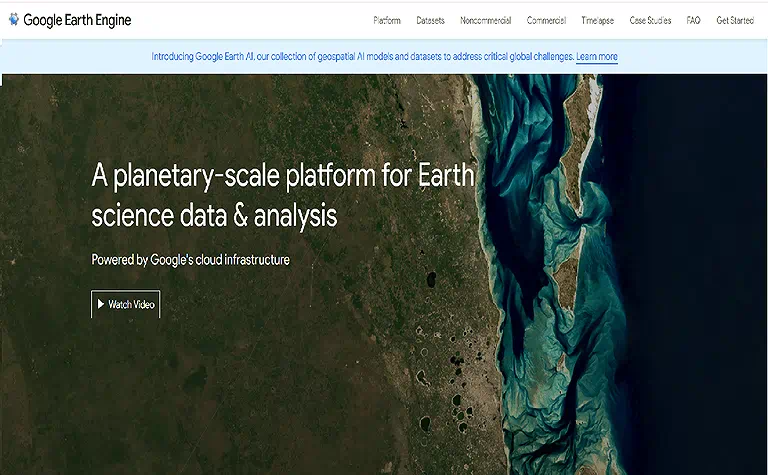
Google Earth Engine Official source image
2 FlyPix AI
FlyPix AI is an AI-driven geospatial platform for Earth surface analysis and object detection in spatial imagery. Its customizable AI models convert raw geographic data into actionable insights for construction, agriculture, and government sectors without requiring programming expertise.
Key Features
- AI-powered geospatial image analysis for detecting objects and surface changes across Earth observation data
- Custom AI model creation without coding knowledge, making advanced mapping accessible to non-technical users
- Geographic coordinate mapping and spatial data visualization for industries like agriculture, construction, and government
- High-performance processing capabilities that transform raw satellite and drone imagery into actionable insights
How to Use FlyPix AI?
- Upload satellite, drone, or geospatial imagery directly into the FlyPix AI platform
- Select existing AI detection models or customize your own model based on project requirements
- Analyze geographic objects, land patterns, or environmental changes using AI-powered mapping tools
- Export reports, mapped coordinates, and processed insights for business, research, or monitoring purposes
Pros
- Easy-to-use interface with no programming knowledge required for custom AI model training
- Strong geospatial analysis capabilities for environmental monitoring and infrastructure planning
- Flexible scalability suitable for both small teams and enterprise-level organizations
- Supports multiple industries, including agriculture, construction, and government operations
Cons
- Lower-tier plans may include limited customer support and slower response times
- Advanced AI processing features can become expensive for smaller organizations
- Requires high-quality geospatial imagery for the most accurate results
- A learning curve may exist for users unfamiliar with GIS and spatial analytics concepts
Best Use Case
- Environmental monitoring and land-use analysis through satellite and drone imagery
- Construction site tracking, infrastructure planning, and geographic mapping projects
- Agricultural monitoring for crop analysis, irrigation planning, and terrain assessment
Limitations
- Performance heavily depends on the quality and resolution of uploaded geospatial data
- Some advanced enterprise features may not be available in entry-level pricing plans
- Internet connectivity and cloud processing requirements can affect large-scale analysis workflows
Pricing Plan
- Free Plan: Limited access to core geospatial AI features suitable for testing and small projects
- Paid Plan: Premium subscriptions provide advanced AI processing, larger storage capacity, custom models, and priority support for enterprise users
Alternative
- Pix4D
- DroneDeploy
- UP42
- Descartes Labs
3 Clarity Movement
Clarity Movement delivers a Sensing-as-a-Service℠ platform combining hardware and cloud software for air pollution monitoring. Using devices like Clarity Node-S, it tracks PM2.5, NO2, ozone, and black carbon while providing real-time dashboards, APIs, scalable deployment, and flexible environmental monitoring solutions.
Key Features
- Real-time air quality monitoring with measurements for PM2.5, NO2, ozone, and black carbon
- Cloud-based dashboard with REST API and OpenMap integration for easy data visualization and management
- Modular hardware system that supports scalable and customizable environmental monitoring deployments
- Expert project support and calibration assistance for reliable implementation and ongoing monitoring accuracy
How to Use Clarity Movement?
- Install Clarity Node-S sensors at targeted monitoring locations for environmental data collection
- Connect devices to the cloud platform to access real-time air quality insights and analytics
- Use the dashboard, OpenMap, or REST API to visualize pollution trends and export monitoring data
- Customize monitoring setups with additional modules based on project requirements and pollutants being tracked
Pros
- Provides accurate real-time environmental monitoring with scalable deployment options
- User-friendly dashboard simplifies data visualization and reporting processes
- Modular system allows flexible monitoring customization for different industries and projects
- Strong expert support and calibration assistance improve deployment reliability
Cons
- Initial setup and implementation may be complex for non-technical teams
- Advanced monitoring modules can increase overall deployment costs
- Requires stable internet connectivity for continuous cloud synchronization and real-time access
- Large-scale monitoring projects may require technical expertise for configuration and maintenance
Best Use Case
- Urban air pollution monitoring and smart city environmental management
- Industrial emissions tracking and environmental compliance reporting
- Research projects requiring scalable and real-time air quality data collection
Limitations
- Accuracy can be affected by sensor placement and environmental conditions
- Full platform capabilities may require premium hardware modules and subscriptions
- Dependence on cloud connectivity may limit usability in remote offline environments
Pricing Plan
- Free Services: Limited access to dashboard features, demos, or trial monitoring capabilities depending on deployment setup
- Paid Plan: Enterprise-focused pricing includes sensor hardware, cloud analytics, calibration support, API access, and advanced monitoring modules
Alternative
- IQAir
- PurpleAir
- BreezoMeter
- Aeroqual
4 Safety Culture
SafetyCulture helps organizations digitize inspections, audits, and checklists while improving operational efficiency through analytics and IoT-based data capture. Its customizable tools support safety, compliance, risk, asset, and quality management with flexible pricing options for teams of different sizes.
Key Features
- Digital inspections, audits, and checklists that help organizations streamline workplace operations and compliance processes
- IoT sensor and data capture integration for analytics, trend identification, and operational monitoring
- Customizable solutions for health and safety management, risk management, and quality assurance workflows
- Advanced reporting, training tools, asset management, and issue tracking for improving workplace safety compliance
How to Use SafetyCulture?
- Create digital inspection templates, audit forms, and workplace checklists within the platform
- Collect operational data through mobile devices, sensors, or IoT integrations during inspections
- Analyze reports and dashboards to identify risks, trends, and operational improvement opportunities
- Assign corrective actions, manage assets, and track compliance activities across teams and departments
Pros
- Easy-to-use digital inspection system that reduces paperwork and manual processes
- Supports real-time analytics and reporting for faster operational decision-making
- Flexible customization options suitable for multiple industries and team sizes
- Combines safety, compliance, training, and asset management in a single platform
Cons
- Premium and enterprise features can become expensive for smaller businesses
- Initial setup and workflow customization may require training and planning
- Some advanced analytics tools may feel overwhelming for basic users
- Dependence on internet connectivity can affect field operations in remote locations
Best Use Case
- Workplace safety inspections and compliance management across industrial environments
- Operational audits and quality assurance monitoring for large organizations
- Risk management and incident reporting for construction, manufacturing, and logistics teams
Limitations
- Advanced automation and analytics capabilities are mostly available in higher-tier plans
- Smaller businesses may not fully utilize all enterprise-level features
- Complex integrations with existing enterprise systems may require technical assistance
Pricing Plan
- Free Plan: Basic inspection templates, limited reporting tools, and small-team collaboration features
- Paid Plan: Premium subscriptions provide advanced analytics, automation, enterprise integrations, asset management, and expanded reporting capabilities
Alternative
iAuditor
Intelex
EHS Insight
VelocityEHS
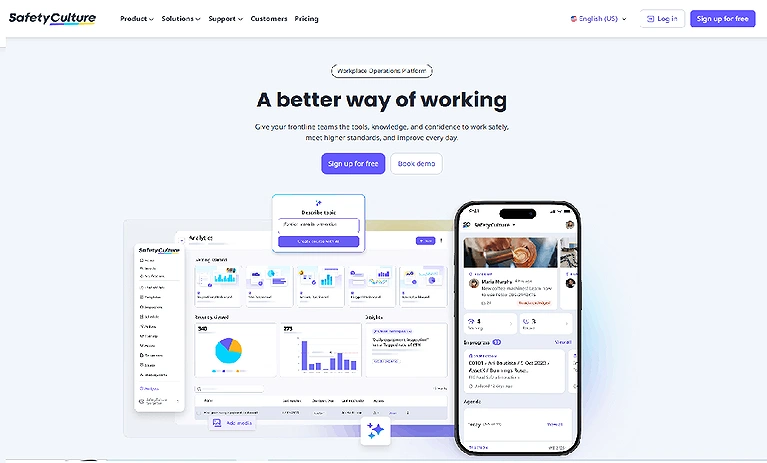
Safety Culture Official source image
5 Cleartrace
Cleartrace is an AI-powered carbon and energy management platform that helps organizations achieve decarbonization through actionable insights, utility integration, sustainability tracking, regulatory compliance, and stakeholder reporting. Its tailored analytics and process automation help businesses improve environmental impact and streamline energy portfolio management.
Key Features
- AI-powered carbon and energy management analytics for sustainability tracking and decarbonization goals
- Integration with utilities and energy suppliers for streamlined energy portfolio management
- Regulatory compliance, stakeholder reporting, and green certification support tools
- Customizable dashboards and tailored analytics for organizations of different sizes
How to Use Cleartrace?
- Connect utility accounts, energy suppliers, and sustainability data sources to the platform
- Monitor carbon emissions, energy usage, and compliance metrics through the dashboard
- Generate reports for stakeholders, sustainability programs, and regulatory requirements
- Use AI-powered analytics to identify opportunities for energy optimization and decarbonization
Pros
- Simplifies carbon accounting and energy management across multiple facilities
- Supports sustainability goals with real-time analytics and reporting capabilities
- Flexible platform suitable for both small businesses and large enterprises
- Streamlines regulatory compliance and stakeholder communication processes
Cons
- Advanced enterprise features may be costly for smaller organizations
- Initial integration with utilities and existing systems can take time
- Requires accurate energy data for reliable analytics and reporting
- Some users may need training to utilize advanced sustainability tools fully
Best Use Case
- Corporate carbon tracking and sustainability reporting initiatives
- Energy portfolio management for enterprises and utility providers
- Regulatory compliance and green certification management projects
Limitations
- Full analytics capabilities depend on accurate and complete utility data integration
- Enterprise-level customization may require technical implementation support
- Smaller teams may not need all advanced sustainability management features
Pricing Plan
- Free Services: Demo access and consultation options for exploring platform capabilities
- Paid Plan: Custom enterprise pricing with advanced analytics, compliance tools, integrations, and sustainability reporting features
Alternative
Persefoni
Watershed
Sweep
SINAI Technologies
6 Envirosuite
Envirosuite is an AI-powered environmental intelligence platform that helps industries monitor air quality, noise, dust, and water conditions in real time. Through predictive analytics, automated reporting, and customizable industrial solutions, it improves regulatory compliance, operational efficiency, environmental performance, and risk management across complex industrial environments.
Key Features
- Real-time monitoring for air quality, noise, dust, and water quality with predictive analytics capabilities
- Specialized solutions, including EVS Industrial, ANOMS Advanced, Plant Optimiser, and SeweX for industrial management
- Automated compliance reporting and environmental analytics for regulatory adherence
- AI-powered forecasting tools that help predict risks, reduce errors, and improve operational decision-making
How to Use Envirosuite?
- Connect environmental sensors and monitoring systems to the Envirosuite platform
- Track real-time environmental indicators through customizable dashboards and analytics tools
- Generate automated compliance reports and monitor operational risks across facilities
- Use predictive insights to optimize industrial operations and reduce environmental impact
Pros
- Supports multiple environmental monitoring areas including air, noise, dust, and water quality
- AI-driven analytics improve forecasting, compliance management, and operational efficiency
- Customizable industry-specific solutions for mining, aviation, water treatment, and manufacturing
- Automated reporting saves time and improves regulatory documentation processes
Cons
- Advanced enterprise solutions may be expensive for smaller organizations
- Initial deployment and sensor integration can be technically complex
- Requires continuous data input and monitoring infrastructure for optimal performance
- Some advanced features may require staff training and technical expertise
Best Use Case
- Environmental monitoring and compliance management for mining and industrial operations
- Airport noise and operational management through ANOMS Advanced
- Water treatment and sewer network monitoring using predictive environmental analytics
Limitations
- Full platform performance depends on high-quality sensor infrastructure and data collection
- Complex enterprise implementations may require dedicated technical support
- Smaller businesses may not utilize all advanced industrial optimization features
Pricing Plan
- Free Services: Demo access and consultation services for evaluating platform capabilities
- Paid Plan: Enterprise pricing includes advanced analytics, predictive monitoring, compliance tools, and industry-specific environmental management solutions
Alternative
Aclima
Clarity Movement
Intelex
Sphera
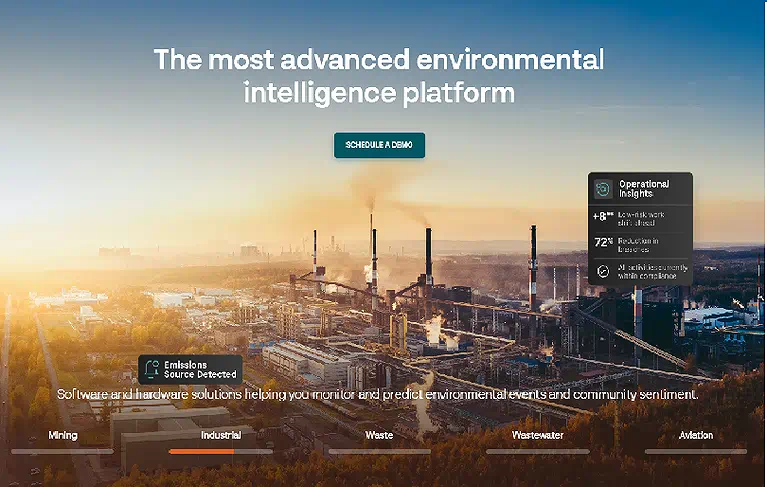
Envirosuite Official page
7 Cority
Cority is an AI-enabled enterprise EHS (Environment, Health, Safety) and sustainability management platform that helps organizations improve employee safety, quality, and environmental performance. It integrates real-world data into optimized workflows, enabling real-time risk insights, hazard reporting, and strategic decision-making across field and office operations.
Key Features
- Integrated EHS management covering health, safety, quality, and environmental performance
- Real-time data insights for risk prevention, hazard reporting, and operational decision-making
- Optimized workflows that support both field workers and office-based teams
- Enterprise-level security with connected systems for sustainability and compliance tracking
How to Use Cority?
- Collect and integrate operational, safety, and environmental data from workplace systems
- Use dashboards to monitor risks, hazards, and compliance metrics in real time
- Report incidents, observations, and safety issues through digital workflows
- Apply analytics insights to improve long-term planning and workplace safety strategies
Pros
- Comprehensive platform covering EHS, quality, and sustainability in one system
- Strong real-time analytics support faster and more informed decision-making
- User-friendly workflows suitable for multiple organizational roles
- Helps improve regulatory compliance and workplace safety performance
Cons
- Data accuracy heavily depends on the quality of input sources
- Limited hardware integration compared to sensor-heavy environmental platforms
- Outdoor and remote monitoring capabilities may be restricted
- Implementation can be complex for large enterprise deployments
Best Use Case
- Corporate EHS management and workplace safety monitoring
- Regulatory compliance tracking for large industrial organizations
- Risk prevention and incident reporting across field and office environments
Limitations
- Performance depends on accurate and consistent data input from users and systems
- Less effective for real-time environmental sensor-based monitoring
- Advanced configuration may require specialized implementation support
Pricing Plan
- Free Services: Demo access and guided evaluation of EHS platform features
- Paid Plan: Enterprise subscription with full EHS management, analytics, compliance tools, and advanced reporting capabilities
Alternative
Sphera
Intelex
VelocityEHS
Benchmark Gensuite
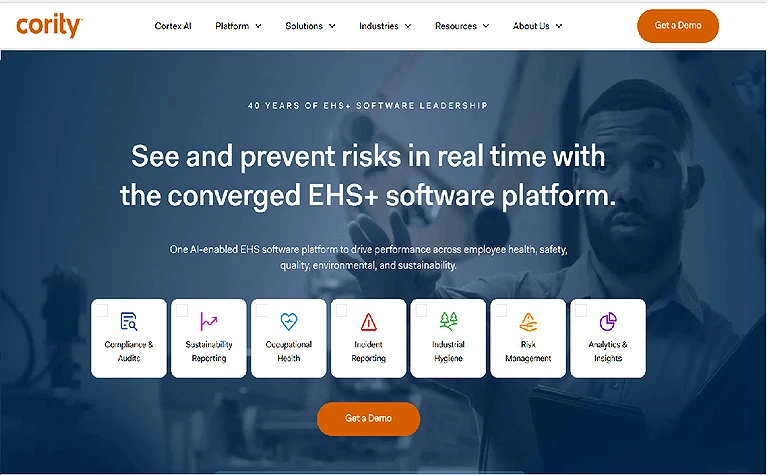
Cority Home page
8 SherpaPharma
SherpaPharma is a cloud-based, paperless environmental monitoring (EM) and workflow automation platform for the pharmaceutical and biotechnology industries. It streamlines sample tracking, microbial monitoring, and compliance reporting, much like the advanced AI tools for nursing students that simplify complex data management. With strong regulatory support and multilingual capabilities, it improves facility monitoring, data integrity, and operational efficiency.
Key Features
- Cloud-based environmental monitoring with automated workflow and sample tracking
- Microbial contamination monitoring with trend analysis, alerts, and baseline tracking
- Regulatory compliance support, including 21 CFR Part 11 and EU cGMP Annex 11
- Multilingual platform with secure data handling, audit trails, and modification tracking
How to Use SherpaPharma?
- Set up environmental monitoring workflows for sample collection and microbial tracking
- Use mobile app or desktop system to log, analyze, and manage EM data
- Monitor alerts, deviations, and contamination trends through dashboards and reports
- Generate compliance-ready reports for audits and regulatory inspections
Pros
- Reduces manual data entry and minimizes transcription errors significantly
- Strong compliance support for pharmaceutical regulatory standards
- Supports multilingual teams across global pharma and biotech operations
- Improves efficiency through automation, alerts, and real-time tracking
Cons
- Requires initial training for smooth onboarding across teams
- May be complex for smaller facilities with limited EM needs
- Dependence on digital systems may challenge users with low technical experience
- Advanced customization may require vendor support
Best Use Case
- Pharmaceutical cleanroom environmental monitoring and compliance tracking
- Biotechnology labs managing microbial contamination and sample workflows
- Manufacturing facilities requiring strict regulatory audit readiness
Limitations
- Performance depends on consistent user data entry and system adoption
- Less suitable for non-regulated industries or basic monitoring needs
- Initial implementation and training can take time for full adoption
Pricing Plan
- Free Services: Demo access and training-based evaluation for platform understanding
- Paid Plan: Enterprise subscription with full EM automation, compliance tools, reporting, and multilingual support
Alternative
Thermo Fisher Scientific
LabWare
Waters Corporation
LabVantage Solutions
9 Aeroqual
Aeroqual is a real-time air quality monitoring system that combines hardware and cloud software to track pollutants in harsh environments such as oil and gas, dust control, and fenceline sites. It enables remote monitoring, automated reporting, and regulatory compliance through cloud dashboards, alerts, and defensible near-reference data.
Key Features
- Real-time monitoring of air pollutants, including dust, gases, and environmental conditions
- Aeroqual Cloud with OneView for remote calibration, diagnostics, updates, and network management
- Automated reporting, site contribution analysis, and compliance alerting for regulations
- Mobile-access dashboards with fast setup and visualization of wind, gas, and dust data
How to Use Aeroqual?
- Deploy Aeroqual sensors at industrial or environmental monitoring sites
- Connect devices to Aeroqual Cloud for centralized data access and management
- Monitor air quality metrics through dashboards, alerts, and mobile applications
- Generate automated reports and perform remote calibration or diagnostics via OneView
Pros
- Strong real-time monitoring capabilities in harsh and remote environments
- Reduces site visits through effective remote access and device management
- Provides automated reporting and regulatory compliance support
- Quick setup with mobile access and cloud-based visualization tools
Cons
- Strong dependency on Aeroqual hardware for full system functionality
- Limited advanced analytics compared to more AI-heavy platforms
- May not fully cover broader EHS or sustainability workflows
- Performance can vary depending on sensor placement and environmental conditions
Best Use Case
- Oil and gas site air quality monitoring and compliance reporting
- Dust and particulate control in construction and industrial zones
- Fenceline environmental monitoring for regulatory adherence and safety
Limitations
- Requires a proprietary hardware ecosystem for full platform operation
- Advanced predictive analytics capabilities are relatively limited
- Less suitable for organizations needing full EHS or multi-domain sustainability tools
Pricing Plan
- Free Services: Demo access and trial evaluation of monitoring platform features
- Paid Plan: Custom pricing including hardware devices, cloud platform access, remote management tools, and reporting features
Alternative
Clarity Movement
Envirosuite
IQAir
BreezoMeter
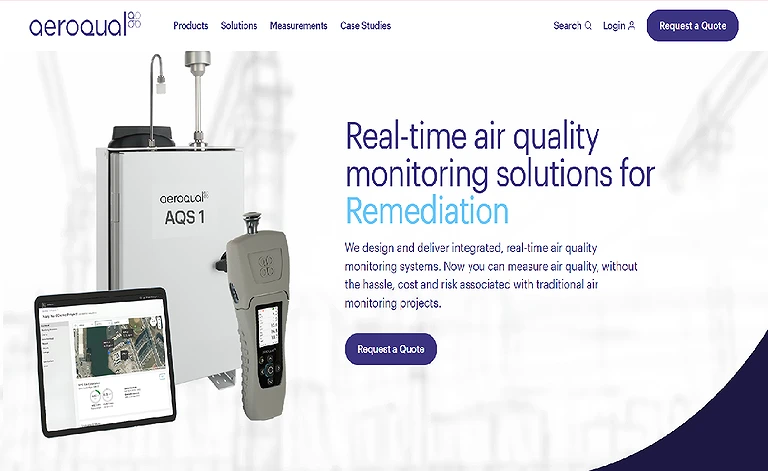
Aeroqual Home image
10 EarthAI
EarthAI is an AI-powered geospatial analytics platform that converts satellite imagery and maps into actionable insights for land monitoring and environmental change detection. It enables real-time tracking of land, water, and vegetation, helping detect risks like illegal mining, oil spills, and environmental degradation for better resource and urban management.
Key Features
- AI-driven satellite imagery analysis for land, water, and vegetation monitoring
- Time-based change detection for environmental risks and land-use tracking
- Precise mapping and location intelligence for resource and urban planning
- Early warning detection for hazards such as illegal mining and oil spills
How to Use EarthAI?
- Upload or connect satellite and geospatial imagery to the EarthAI platform
- Run AI models to analyze land changes, environmental risks, and resource patterns
- Track time-series data to monitor vegetation, water bodies, and soil conditions
- Generate maps and insights for agriculture, urban planning, or environmental reporting
Pros
- Provides powerful global-scale land and environmental monitoring capabilities
- Helps detect environmental risks early through AI-based analysis
- Supports agriculture, resource management, and urban development planning
- Reduces dependency on manual field surveys in remote or inaccessible areas
Cons
- Requires high-quality satellite or geospatial data for best accuracy
- Can be complex for users without GIS or remote sensing experience
- Advanced features may require significant computational resources
- Limited effectiveness in areas with poor or infrequent satellite coverage
Best Use Case
- Environmental risk detection, such as illegal mining and oil spills
- Agricultural monitoring for crop health and soil condition analysis
- Urban planning and land-use change tracking at the regional or global scale
Limitations
- Performance depends heavily on the availability and resolution of satellite data
- May require technical expertise in geospatial analysis for full utilization
- Real-time accuracy can be limited by satellite revisit frequency
Pricing Plan
- Free Services: Basic access to mapping tools, demos, or limited geospatial analysis features
- Paid Plan: Subscription-based access with advanced AI analytics, large-scale processing, and enterprise-level geospatial insights
Alternative
Planet Labs
Descartes Labs
Orbital Insight
UP42
EarthAI Home image
11 Benchmark Gensuite
Benchmark Gensuite is an AI-powered EHS and sustainability management platform that streamlines inspections, incident reporting, risk assessments, and compliance workflows. With Genny AI agents and mobile access, it helps organizations automate safety processes, improve environmental performance tracking, and ensure regulatory compliance across operations.
Key Features
- AI-driven EHS workflows with Genny AI agents for inspections, reports, and risk summaries
- Incident management, hazard tracking, and safety reporting with real-time alerts
- Mobile-first platform for field access to audits, permits, training, and chemical safety data
- Sustainability reporting and compliance tools for environmental and regulatory requirements
How to Use Benchmark Gensuite?
- Deploy a mobile or web platform to manage inspections, audits, and safety workflows
- Log incidents, hazards, and compliance data directly from field or office operations
- Use AI tools to generate risk insights, summaries, and automated reports
- Monitor sustainability metrics, permits, and regulatory compliance in real time
Pros
- Strong AI automation reduces manual reporting and administrative workload
- Comprehensive EHS and sustainability coverage in a single platform
- Mobile access improves field productivity and real-time data entry
- Advanced analytics support better risk detection and decision-making
Cons
- Initial setup and configuration can be complex for new organizations
- AI-driven features may require high computational and data input quality
- Limited hardware integration for real-time environmental sensor monitoring
- Platform may feel overwhelming for small teams with basic EHS needs
Best Use Case
- Enterprise-level EHS compliance and risk management programs
- Industrial safety inspections, audits, and incident reporting automation
- Sustainability reporting and regulatory compliance tracking
Limitations
- Requires structured data and proper onboarding for best performance
- Less effective for hardware-heavy environmental monitoring systems
- Implementation may demand significant training and setup time
Pricing Plan
- Free Services: Demo access and platform evaluation for EHS workflows
- Paid Plan: Enterprise subscription with full AI automation, compliance tools, mobile access, and advanced reporting features
Alternative
Cority
Sphera
Intelex
VelocityEHS
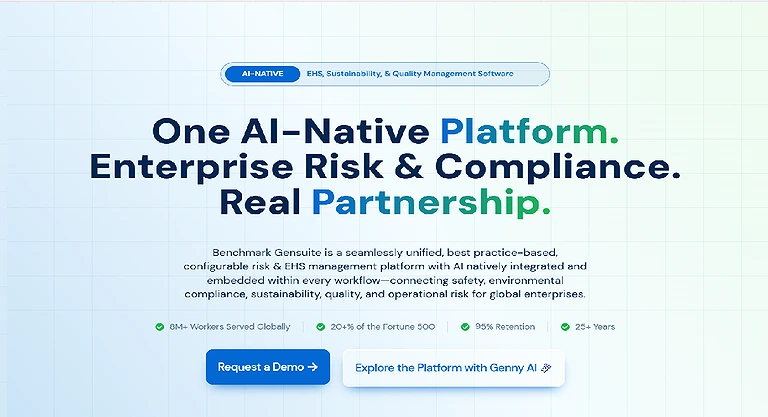
Benchmark Gensuite Official source image
12 Quentic
Quentic is a cloud-based EHS and ESG management platform that integrates health, safety, environmental, and sustainability processes into a modular system. It uses AI-driven analytics and workflows to support compliance, incident tracking, audits, and sustainability reporting while improving decision-making and reducing administrative workload.
Key Features
- Integrated EHS and ESG modules covering health, safety, environment, and sustainability management
- AI-powered analytics for investigation support, trend detection, and risk analysis
- Quentic Analytics and Quentic Connect for dashboards, KPIs, reporting, and stakeholder collaboration
- Automated workflows for audits, compliance preparation, and hazardous material management
How to Use Quentic?
- Configure modular EHS and ESG components based on organizational requirements
- Input data for incidents, audits, chemicals, and sustainability metrics into the system
- Use dashboards and analytics tools to monitor KPIs, risks, and compliance status
- Generate reports and collaborate with stakeholders through Quentic Connect
Pros
- Strong modular design allows flexible customization for different industries
- AI support improves reporting, compliance, and decision-making efficiency
- Excellent ESG integration for sustainability and regulatory requirements
- Reduces administrative workload through automation and structured workflows
Cons
- Requires careful setup and configuration of multiple modules
- Learning curve can be steep for new users or smaller teams
- Limited real-time hardware or sensor-based environmental monitoring
- AI features are more administrative than field or IoT-focused
Best Use Case
- Enterprise EHS and ESG compliance management programs
- Sustainability reporting and stakeholder engagement initiatives
- Audit preparation and regulatory compliance workflows
Limitations
- Not ideal for real-time environmental sensor monitoring systems
- Requires a structured setup for full module optimization
- Advanced features may take time to fully implement and train teams on
Pricing Plan
- Free Services: Demo access and trial evaluation of EHS/ESG modules
- Paid Plan: Subscription-based enterprise pricing with full module access, AI analytics, dashboards, and reporting tools
Alternative
Cority
Sphera
Benchmark Gensuite
Intelex
13 IBM Envizi
IBM Envizi is an AI-driven ESG and sustainability data management platform that consolidates scattered enterprise data into a single system for tracking emissions, improving sustainability performance, and producing audit-ready ESG reports. It supports Scope 3 calculations, forecasting, and compliance-focused analytics to help organizations manage decarbonization and ESG reporting at scale.
Key Features
- Centralized ESG data management with consolidation from multiple enterprise data sources
- AI-powered analytics for emissions tracking, Scope 3 calculations, and sustainability forecasting
- Automated data capture and transformation for audit-ready ESG reporting
- Enterprise-scale dashboards for performance tracking across regions and business units
How to Use IBM Envizi?
- Connect internal and external data sources to centralize ESG and emissions information
- Use automated tools to calculate carbon footprints, including Scope 1, 2, and 3 emissions
- Generate audit-ready sustainability reports and regulatory disclosures
- Monitor ESG performance through dashboards and forecasting analytics
Pros
- Strong capability for ESG data consolidation and reporting automation
- Reduces manual data entry and improves data accuracy through AI-driven processing
- Scalable across large enterprises with multiple regions and business units
- Supports advanced sustainability forecasting and decarbonization planning
Cons
- Requires complex integration with enterprise data systems
- May involve a high implementation cost for smaller organizations
- Setup and configuration can be time-consuming
- Advanced features require training for effective use
Best Use Case
- Enterprise ESG reporting and regulatory compliance management
- Carbon accounting and Scope 3 emissions tracking for large organizations
- Sustainability strategy planning and decarbonization forecasting
Limitations
- Performance depends heavily on the quality and availability of enterprise data sources
- Less suitable for small businesses with simple ESG needs
- Integration and onboarding can require significant technical support
Pricing Plan
- Free Services: Demo access and guided evaluation of ESG reporting capabilities
- Paid Plan: Enterprise subscription with full ESG data integration, AI analytics, Scope 3 modeling, and audit-ready reporting tools
Alternative
SAP Sustainability Control Tower
Persefoni
Watershed
Sphera
14 ComplianceQuest
ComplianceQuest is an AI-powered cloud platform that unifies EHS, quality management, supplier management, and sustainability processes into a single system. It supports closed-loop workflows, real-time tracking, and automation to improve compliance, reduce errors, and enhance decision-making across enterprise operations.
Key Features
- Unified platform for EHS, quality management, supplier management, and sustainability tracking
- AI-powered automation for workflows, task management, and continuous issue resolution
- Integrated modules for audits, inspections, training, risk management, and document control
- Real-time data visibility with support for environmental and operational metrics
How to Use ComplianceQuest?
- Configure modules for quality, safety, supplier, and sustainability management needs
- Collect and manage operational data through inspections, audits, and system integrations
- Use AI-driven workflows to automate tasks, issue resolution, and compliance processes
- Monitor performance metrics and generate reports for decision-making and audits
Pros
- Strong all-in-one platform covering EHS, quality, and supplier management
- AI automation reduces manual work and improves process efficiency
- Cloud-based system enables real-time visibility and collaboration
- Highly configurable for complex enterprise workflows
Cons
- Complex usability for users managing multiple advanced workflows
- Requires proper setup and configuration for full effectiveness
- May be overwhelming for smaller organizations with simple needs
- Integration across modules can require technical expertise
Best Use Case
- Enterprise quality and compliance management across global operations
- Integrated EHS and supplier risk management programs
- Continuous improvement and audit-ready regulatory compliance systems
Limitations
- Advanced configuration can be complex and time-consuming
- Best suited for large enterprises rather than small businesses
- Full value depends on successful system integration and setup
Pricing Plan
- Free Services: Demo access and product walkthrough for platform evaluation
- Paid Plan: Enterprise subscription with full access to AI automation, EHS/quality modules, supplier management, and reporting tools
Alternative
MasterControl
ETQ
Sphera
Intelex
ComplianceQuest Home image
15 Aethair
Aethair is an AI-powered environmental intelligence platform that combines sensor hardware with real-time analytics to monitor air quality across industrial, urban, and sensitive environments. It transforms raw environmental data into actionable insights, compliance reports, and alerts for hazards like pollution, wildfire smoke, and gas exposure using AI-driven processing and closed-loop monitoring systems.
Key Features
- Real-time air quality and environmental monitoring using integrated sensor networks and AI analytics
- Closed-loop system with AI copilots for insights, alerts, and automated compliance reporting
- Advanced tools like Noesis for large-scale data processing and Environet Reports for regulatory compliance
- Supports particle detection, gas monitoring, and third-party sensor integrations for flexible deployments
How to Use Aethair?
- Deploy Aethair sensors (such as Aethair PRO) in target environments like construction sites or urban areas
- Connect devices to the platform for real-time data collection and AI-powered analysis
- Monitor dashboards for alerts, air quality trends, and environmental risks
- Generate compliance reports and insights using Environet Reports and AI copilots
Pros
- Strong real-time environmental monitoring with AI-powered insights and automation
- Flexible deployment across industries, including government, military, and healthcare
- Supports multiple pollutants and integrates third-party sensing devices
- Provides actionable alerts and compliance-ready reporting tools
Cons
- Setup and configuration can be complex for large-scale deployments
- Performance depends on correct pollutant mapping and sensor calibration
- Environmental coverage may be limited in some deployment scenarios
- Advanced customization may require technical expertise and coordination
Best Use Case
- Industrial and construction site air quality and perimeter monitoring
- Urban air pollution tracking and wildfire smoke detection systems
- Sensitive environment monitoring, such as healthcare, aviation, and military zones
Limitations
- Requires a proper sensor deployment strategy for accurate results
- Some environmental scenarios may need additional calibration and configuration
- Coverage and accuracy can vary depending on pollutant type and location density
Pricing Plan
- Free Services: Demo access and evaluation of monitoring and reporting capabilities
- Paid Plan: Enterprise pricing with full sensor integration, AI analytics, compliance reporting, and scalable deployment options
Alternative
Clarity Movement
Envirosuite
Aeroqual
IQAir
Which AI Environmental Monitoring Tool Should You Choose?
Choosing the right AI environmental monitoring platform depends on your organization's monitoring objectives, industry, and technical requirements. While some solutions specialize in satellite imagery and geospatial intelligence, others focus on ESG reporting, air quality monitoring, environmental compliance, or industrial risk management. Instead of selecting the platform with the longest feature list, prioritize the one that best aligns with your operational goals and existing workflows.
| If You Need... | Recommended Tools |
| Large-scale satellite imagery & geospatial analysis | Google Earth Engine, FlyPix AI |
| Air quality monitoring & pollution tracking | Clarity Movement, Aeroqual, Aethair |
| Carbon accounting & ESG reporting | IBM Envizi, Cleartrace |
| Environmental compliance & EHS management | Cority, Quentic, ComplianceQuest |
| Industrial environmental intelligence | Envirosuite |
| Mining & geological exploration | EarthAI |
| Workplace inspections & environmental audits | SafetyCulture, Benchmark Gensuite |
| Pharmaceutical environmental compliance | SherpaPharma |
Tip: Start by identifying your primary monitoring objective such as emissions tracking, regulatory compliance, or sustainability reporting before comparing features and pricing.
How to Choose the Right AI Environmental Monitoring Tool
With numerous AI-powered environmental monitoring solutions available, selecting the right platform requires evaluating more than just its AI capabilities. Consider how well the software integrates with your existing infrastructure, supports your industry requirements, and scales as your environmental initiatives grow.
Before making a decision, evaluate the following factors:
- Monitoring Objectives: Determine whether you need air quality monitoring, carbon tracking, satellite analysis, ESG reporting, or regulatory compliance.
- AI Capabilities: Look for features such as predictive analytics, anomaly detection, computer vision, and automated environmental reporting.
- Data Sources: Ensure the platform supports satellite imagery, drones, IoT sensors, GIS data, weather feeds, or other relevant inputs.
- Integration Support: Verify compatibility with cloud platforms, APIs, ERP systems, GIS software, and existing environmental management tools.
- Ease of Use: Choose software with intuitive dashboards, customizable reports, and minimal training requirements.
- Scalability: Select a solution that can expand across multiple facilities, projects, or geographic regions.
- Compliance & Security: Confirm support for environmental regulations, ESG frameworks, and secure data management.
- Pricing & ROI: Compare licensing models, implementation costs, and long-term value based on your organization's budget.
By evaluating these factors, organizations can invest in a platform that not only meets current environmental monitoring needs but also supports future sustainability initiatives.
Common Challenges of AI Environmental Monitoring
Although AI has transformed environmental monitoring, successful implementation still depends on data quality, infrastructure, and organizational readiness. Understanding these challenges helps organizations choose realistic solutions and maximize long-term value.
Some of the most common challenges include:
- Data Quality Issues: AI models rely on accurate and consistent environmental data; incomplete or noisy datasets can reduce prediction accuracy.
- Complex System Integration: Connecting AI platforms with existing IoT devices, GIS software, ERP systems, and legacy infrastructure can require additional configuration.
- High Initial Investment: Enterprise-grade environmental monitoring platforms often involve implementation, training, and customization costs.
- Regulatory Complexity: Environmental regulations differ across countries and industries, making compliance management more challenging for global organizations.
- Scalability Concerns: Expanding monitoring across multiple locations may require additional sensors, cloud resources, and data management capabilities.
- Technical Expertise: Organizations may need skilled personnel to interpret AI-driven insights and manage advanced environmental analytics.
- Privacy & Data Security: Protecting sensitive environmental and operational data is essential, particularly for critical infrastructure and regulated industries.
Addressing these challenges through proper planning, employee training, and scalable technology selection helps organizations maximize the benefits of AI-powered environmental monitoring.
Future of AI Environmental Monitoring Tools
The future of AI environmental monitoring is being shaped by rapid advancements in artificial intelligence, remote sensing, and connected technologies. As environmental challenges become more complex, organizations will increasingly rely on intelligent platforms that provide real-time insights, predictive analytics, and automated decision support.
Key trends expected to define the next generation of AI environmental monitoring include:
Smarter Predictive Analytics to forecast pollution events, climate risks, and environmental changes before they occur.
Greater Integration with IoT & Edge Computing for faster, localized environmental monitoring and decision-making.
Higher-Resolution Satellite & Drone Intelligence enabling more precise land, vegetation, and infrastructure analysis.
AI-Powered ESG & Sustainability Reporting that automates carbon accounting and regulatory disclosures.
Digital Twins of Environmental Systems to simulate ecosystems, industrial sites, and urban environments for better planning.
Autonomous Environmental Monitoring using AI-enabled drones, robots, and sensor networks with minimal human intervention.
Advanced Generative AI Assistants capable of summarizing environmental reports, identifying trends, and providing actionable recommendations.
Cross-Platform Environmental Intelligence that combines satellite imagery, IoT sensors, weather data, and enterprise systems into a unified decision-making platform.
As these innovations continue to mature, AI environmental monitoring tools will evolve beyond data collection into intelligent decision-support systems that help organizations protect natural resources, improve sustainability performance, and respond proactively to environmental risks.
FAQ
1. What is AI environmental monitoring, and how does it work?
AI environmental monitoring uses artificial intelligence to analyze data collected from satellites, IoT sensors, drones, weather stations, and other monitoring devices. By applying machine learning and predictive analytics, these platforms detect environmental changes, identify pollution sources, forecast risks, and generate actionable insights in real time.
2. What types of environmental data can AI monitoring tools analyze?
AI environmental monitoring platforms can analyze air quality, water quality, greenhouse gas emissions, weather conditions, land use changes, biodiversity, soil health, satellite imagery, industrial emissions, noise pollution, and other environmental indicators collected from connected sensors and remote sensing technologies.
3. Which industries benefit most from AI environmental monitoring tools?
These tools are widely used across manufacturing, energy, agriculture, mining, construction, pharmaceuticals, transportation, government agencies, research institutions, and smart city initiatives to improve environmental compliance, sustainability, and operational efficiency.
4. What is the best AI environmental monitoring tool for satellite imagery?
For large-scale satellite imagery analysis and geospatial intelligence, Google Earth Engine is one of the most widely used platforms due to its extensive satellite data catalog, cloud-based processing capabilities, and advanced geospatial analytics.
5. Which AI tools are best for ESG reporting and carbon management?
Organizations focused on sustainability reporting and carbon accounting commonly choose platforms like IBM Envizi and Cleartrace, as they provide emissions tracking, ESG reporting, and sustainability performance analytics for enterprise environments.
6. How do AI environmental monitoring tools support regulatory compliance?
These platforms automate environmental data collection, generate compliance reports, monitor emissions, identify potential regulatory violations, and help organizations comply with environmental standards, ESG frameworks, and industry-specific regulations more efficiently.
7. Can small and medium-sized businesses use AI environmental monitoring software?
Yes. While some platforms are designed for large enterprises, several AI environmental monitoring solutions offer scalable deployment options that allow startups and small businesses to monitor environmental performance, improve sustainability initiatives, and automate reporting without extensive infrastructure.
8. What should I consider before choosing an AI environmental monitoring platform?
Key considerations include your monitoring objectives, supported data sources, AI capabilities, industry requirements, integration options, scalability, ease of use, regulatory compliance support, deployment model, and overall cost of ownership.
9. What are the common limitations of AI environmental monitoring tools?
Some common challenges include dependency on high-quality environmental data, integration with legacy systems, implementation costs, infrastructure requirements, evolving regulatory standards, and the need for skilled personnel to interpret AI-generated insights effectively.
10. Can AI predict future environmental events such as pollution spikes or wildfires?
Yes. Many modern AI platforms combine historical records with real-time environmental data to forecast events such as pollution spikes, flooding, extreme weather, wildfire risks, and changes in environmental conditions, enabling organizations to take ptrareventive action before problems escalate.
Conclusion
AI environmental monitoring tools are helping organizations monitor environmental conditions more accurately by combining artificial intelligence, satellite imagery, IoT sensors, and predictive analytics. Whether you need geospatial analysis, air quality monitoring, carbon accounting, ESG reporting, or environmental compliance, choosing the right platform depends on your monitoring objectives, industry requirements, and integration needs. Solutions like Google Earth Engine and EarthAI excel in satellite-based analysis, while IBM Envizi and Cleartrace simplify sustainability reporting and carbon management. For compliance-focused organizations, Cority, ComplianceQuest, and Quentic provide comprehensive environmental and EHS management capabilities. By comparing each platform's features, pricing, strengths, and limitations, you can select the solution that best supports your environmental goals. If you're also exploring AI tools for scientific research, check out our dedicated guide and If you're planning your next journey, explore our guide to AI travel planning tools to discover platforms that create personalized itineraries in minutes.