.webp)
How to Avoid Copyright Issues and Stay Legally Compliant When Creating AI Videos
Creating an AI video has never been easier. Keeping it copyright-safe is the real challenge. One click can generate stunning visuals, realistic voices, and cinematic scenes, yet that same click can also introduce licensing restrictions, copyrighted assets, or commercial-use limitations that many creators never notice until a claim, takedown, or client complaint appears. That's a surprise no creator wants in their inbox.
The good news? Avoiding copyright issues doesn't require a law degree or endless legal documents. It starts with choosing the right AI tools, understanding commercial licensing, verifying training and media rights, and following a few practical compliance habits before you publish. This guide explains how to create AI videos legally, reduce copyright risks, and build a workflow that protects your content, your revenue, and your brand—without turning creativity into paperwork.

 July 17, 2026 | 14 min read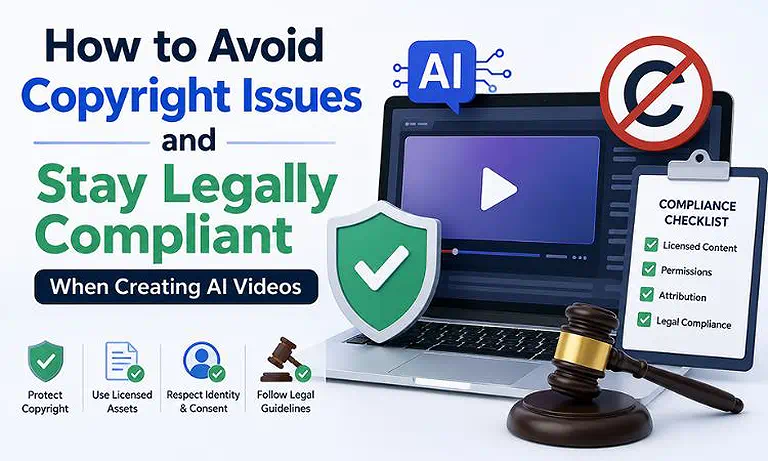
Cover Photo How to Avoid Copyright Issues and Stay Legally Compliant When Creating AI Videos
AI Video Copyright-Safe Software Stack at a Glance
| AI Video Software Stack at a Glance | Details |
| Tools Used | 4 specialized AI video tools selected to support copyright-safe, commercially compliant video production. |
| Recommended Workflow | Adobe Firefly Video Model generates commercially safe visuals → Synthesia or Colossyan creates consent-based AI avatars → Veed.io edits, captions, and prepares videos for commercial publishing using licensed media. |
| Legal & Copyright Focus | Prioritizes transparent licensing, verified content rights, identity protection, and enterprise governance to minimize copyright, licensing, and compliance risks. |
| Compliance Efficiency | Assigns one trusted platform to each production stage, streamlining governance, reducing manual legal reviews, and simplifying enterprise content workflows. |
| Key Benefit | Builds a lean, copyright-safe AI video software stack that protects intellectual property, strengthens brand trust, and supports legally compliant commercial video creation. |
Who Should Read This Guide?
Whether you're creating AI videos for your own business or establishing compliance standards across an enterprise, this guide is designed for anyone who wants to reduce copyright risks, meet commercial licensing requirements, and publish AI-generated content with confidence.
a) Enterprise Marketing Agencies – If you're managing AI-powered campaigns for corporate clients and need a software stack that protects client assets, prevents copyright disputes, and satisfies contractual obligations.
b) Corporate Legal Teams & General Counsel – If you're evaluating AI platforms for copyright compliance, commercial licensing, data governance, vendor indemnification, and emerging AI regulations before enterprise adoption.
c) Brand Managers – If you're scaling AI-generated content across multiple channels while maintaining brand reputation, copyright integrity, and commercially approved creative assets.
d) Learning & Development (L&D) Leaders – If you're producing AI-powered training, onboarding, or compliance videos while protecting employee likeness, sensitive information, and organizational privacy.
e) Procurement & IT Decision-Makers – If you're comparing AI vendors based on security certifications, privacy controls, commercial licensing, enterprise agreements, and long-term legal reliability rather than features alone.
The Root Causes of Copyright Issues and Legal Risks in AI Video Creation
Most AI video copyright problems don't begin after you click Publish—they begin much earlier. A video that looks completely original can still carry hidden legal risks through its AI model, training data, stock assets, synthetic voices, commercial licensing terms, or ownership restrictions. Because many of these risks remain invisible during production, creators often don't discover them until a copyright claim, takedown notice, or legal dispute appears.
The real challenge is that AI video creation involves multiple layers of ownership, licensing, and intellectual property—many of which aren't immediately visible to the user. Every asset, from the model generating the content to the music, voice, images, and third-party media it relies on, can introduce a different legal obligation. As organizations adopt AI at scale and regulations continue to evolve, overlooking even one of these hidden factors can expose an entire project to copyright disputes, compliance violations, or commercial-use restrictions.
How to Build a Copyright-Safe AI Video Software Stack?
Building a copyright-safe AI video software stack isn't about subscribing to the most popular AI tools. It's about selecting platforms that meet commercial licensing requirements, respect intellectual property rights, and support legally compliant content creation from the first prompt to the final export. A structured evaluation process reduces copyright exposure, strengthens compliance, and ensures every stage of your AI video workflow is built on trusted, commercially approved software.
AI Video Copyright-Safe Selection Workflow
Audit Training Data → Verify Identity & Content Rights → Select Commercially Safe AI Tools → Monitor Compliance & Provenance
Step 1: Verify Training Data and Content Licensing
Every AI video begins with data, making the source of that data one of the biggest factors in copyright compliance. Before adopting any AI platform, review how its models are trained, where its media assets originate, and whether its licensing policies are clearly documented. Platforms built on licensed, public-domain, or creator-authorized datasets generally provide greater legal transparency than vendors with unclear training practices. Understanding these foundations early helps identify potential copyright risks before they become part of your production workflow.
Step 2: Validate Commercial Usage Rights
Creating an AI-generated video doesn't automatically give you the right to publish, monetize, or distribute it commercially. Commercial permissions vary widely between providers, subscription plans, and asset types. Carefully review the platform's licensing terms, output ownership, permitted commercial uses, and any indemnification policies available for business or enterprise customers. These details determine whether your content can be used confidently in marketing campaigns, client projects, advertising, or other commercial environments.
Step 3: Protect Identity, Voice, and Intellectual Property
AI can generate realistic avatars, clone voices, and recreate branded elements with remarkable accuracy, but these capabilities also introduce significant legal responsibilities. Whenever your workflow involves recognizable individuals, trademarks, logos, copyrighted media, or synthetic voices, verify that appropriate authorization, identity verification, and documented consent are in place. Overlooking these rights can expose a project to copyright disputes, Right of Publicity claims, privacy concerns, and reputational damage that extends well beyond the published video.
Step 4: Monitor Compliance and Content Provenance
Copyright compliance doesn't end when the final video is exported. Every AI-generated asset should be supported by a clear record of its licensing status, content sources, AI-generated elements, approvals, and version history. Maintaining comprehensive documentation strengthens internal governance, simplifies legal reviews, and creates a verifiable audit trail as transparency standards, customer expectations, and AI regulations continue to evolve. Strong provenance records also make it easier to demonstrate how commercial content was created if questions arise in the future.
What You'll Gain from This Workflow
By following this structured evaluation workflow, you'll build a copyright-safe AI video software stack that supports legal compliance from content creation to commercial distribution. It reduces the risk of copyright disputes, licensing conflicts, intellectual property violations, and regulatory issues while improving procurement decisions, strengthening brand protection, and giving your organization greater confidence to publish AI-generated videos at scale.
Recommended AI Video Software for Copyright-Safe Content Creation
Building a copyright-safe AI video workflow isn't about relying on a single AI platform—it's about selecting specialized software that reduces legal risk throughout the entire production process. From generating original visuals and verifying digital identities to protecting employee likeness and publishing commercially safe content, each tool below serves a distinct compliance purpose. Together, they form a balanced AI video software stack that helps creators and organizations minimize copyright risks while maintaining legal compliance.
Adobe Firefly Video Model — Best for Copyright-Safe AI Video Generation
For organizations creating commercial videos, Adobe Firefly Video Model provides one of the strongest foundations for a legally compliant AI video workflow. Rather than focusing solely on generation quality, Adobe emphasizes transparent data sourcing, commercially safe outputs, and enterprise governance, making it well suited for branded marketing, advertising, and client projects where copyright risk must be minimized.
Why It Stands Out: Creates commercially safe AI-generated visuals for marketing, advertising, and enterprise video production.
Legal & Copyright Strength: Trained on licensed Adobe Stock assets, public-domain content, and other authorized sources while supporting Content Credentials (C2PA) for content provenance and transparency.
Best For: Enterprise marketing teams, creative agencies, and businesses producing commercial AI videos.
Synthesia — Best for Compliant AI Avatars
When AI videos require presenters, Synthesia provides an enterprise-focused platform designed around identity verification, consent, and responsible AI practices. Its governance model enables organizations to produce multilingual training, marketing, and corporate communication videos while reducing the risks associated with unverified avatar-generation tools.
Why It Stands Out: Produces AI presenter videos through a secure, enterprise-ready platform with built-in governance and trust controls.
Legal & Copyright Strength: Identity verification, consent-based avatar creation, responsible AI policies, and proactive safeguards against deepfakes and unauthorized impersonation help reduce legal and reputational risks.
Best For: Corporate communications, customer education, employee training, and multilingual business video production.
Colossyan — Best for Enterprise Training and Employee Consent
For internal training, onboarding, and compliance programs, Colossyan focuses on secure digital avatar creation backed by explicit user consent and enterprise-grade governance. Its approach helps organizations create engaging training content while protecting employee rights, sensitive information, and organizational policies.
Why It Stands Out: Delivers AI-powered training videos while prioritizing employee consent, privacy, and enterprise governance.
Legal & Copyright Strength: Biometric identity verification, consent-based avatar creation, SOC 2 Type II certification, and enterprise data protection policies help safeguard employee likeness and proprietary business content.
Best For: Human Resources, Learning & Development (L&D) teams, compliance departments, and enterprise onboarding programs.
Veed.io — Best for Compliant Video Editing and Publishing
Creating a legally compliant AI video doesn't end after generation. Veed.io supports secure post-production by combining browser-based editing, automated captions, collaboration tools, and licensed media within a centralized workflow. This enables teams to prepare AI-generated videos for commercial distribution while maintaining copyright-conscious production practices.
Why It Stands Out: Streamlines editing, captioning, localization, and publishing within a secure cloud-based production environment.
Legal & Copyright Strength: GDPR-compliant infrastructure, licensed royalty-free media integrations, and secure collaboration features help reduce copyright and compliance risks during post-production.
Best For: Marketing teams, creative agencies, social media managers, and businesses publishing AI-generated videos for commercial use.
Critical Legal Mistakes to Avoid When Building a Copyright-Safe AI Video Software Stack
Even the most advanced AI video software can't protect you from poor legal decisions. Many copyright disputes and compliance failures occur because organizations make incorrect assumptions about ownership, commercial licensing, user consent, or regulatory obligations—not because the technology itself is flawed. Recognizing these mistakes before publishing AI-generated content can significantly reduce legal exposure and help you build a more resilient, copyright-safe production workflow.
1. Assuming AI-Generated Content Is Automatically Copyright-Safe
One of the biggest misconceptions is that AI-generated content is automatically free to use commercially. In reality, ownership rights, licensing terms, and permitted use vary between AI platforms and subscription plans. Publishing content without understanding these conditions can result in copyright disputes, licensing restrictions, or unexpected commercial-use limitations.
2. Ignoring Commercial Licensing and Platform Terms
Many creators compare AI tools based on features and pricing while overlooking the legal terms that govern how generated content can be used. Consumer plans often provide fewer legal protections than enterprise agreements and may include limitations on commercial usage, indemnification, or data governance. Failing to review these terms can expose both creators and businesses to unnecessary legal risk.
3. Using AI Avatars, Voices, or Branded Assets Without Proper Authorization
Copyright compliance extends beyond generated visuals. AI avatars, cloned voices, trademarks, logos, music, and recognizable individuals all carry their own legal obligations. Using these assets without explicit permission or documented consent can lead to copyright claims, Right of Publicity disputes, privacy complaints, and reputational damage—particularly in commercial projects.
4. Treating Legal Compliance as a One-Time Checklist
Legal compliance doesn't end once a video is exported. AI regulations, platform policies, licensing agreements, and disclosure requirements continue to evolve, meaning content that is compliant today may require additional review tomorrow. Organizations that fail to monitor these changes increase their exposure to copyright issues, regulatory challenges, and avoidable compliance risks as AI adoption grows.
Best Practices for Building a Copyright-Safe AI Video Workflow
Creating legally compliant AI videos isn't a one-time task—it's an ongoing process that should be embedded into every stage of production. The most successful organizations don't rely solely on software safeguards; they combine trusted AI platforms with standardized workflows, clear governance, and regular policy reviews. These best practices help reduce legal uncertainty while ensuring every AI-generated video is ready for commercial use.
1. Verify Licensing and Content Rights Before Production
Before generating your first scene, confirm that the AI platform clearly documents its training data, commercial licensing, output ownership, and permitted usage rights. Starting every project with transparent licensing significantly reduces the likelihood of copyright disputes, ownership conflicts, and commercial-use restrictions later in the workflow.
2. Make Legal Reviews Part of Every Production Workflow
Treat copyright and legal reviews as a standard production checkpoint rather than a final approval step. Verify commercial usage rights, identity permissions, third-party assets, and intellectual property requirements before publishing. Embedding these reviews into every project creates a consistent governance process and minimizes avoidable legal risks across teams.
3. Keep Platform Policies and AI Regulations Under Review
AI technology and its legal landscape continue to evolve. Regularly review software licensing terms, acceptable-use policies, enterprise agreements, and applicable regulations to ensure your workflow remains aligned with current legal requirements. Staying informed helps organizations respond quickly to policy changes before they affect published content.
4. Maintain a Complete Compliance and Licensing Record
Every AI-generated video should have a clear record of its content sources, licensing agreements, approvals, consent documentation, and AI-generated assets. A well-maintained audit trail strengthens internal governance, simplifies legal reviews, and provides valuable evidence if copyright ownership, licensing, or regulatory questions arise in the future.
FAQs
1. Can AI-generated videos be copyrighted?
Yes. AI-generated videos can receive copyright protection depending on the level of human creativity involved and the applicable laws in your jurisdiction. Always review your AI platform's ownership terms and commercial licensing policies before publishing or monetizing content.
2. How can I avoid copyright issues when creating AI videos?
Use AI tools with transparent training data, verify commercial licensing rights, obtain permission for third-party assets, and document ownership throughout production. Following a structured workflow significantly reduces copyright and legal risks.
3. Which AI video tools are safest for commercial use?
Enterprise-focused platforms such as Adobe Firefly Video Model, Synthesia, Colossyan, and Veed.io provide stronger licensing transparency, governance, and compliance features, making them suitable choices for commercial AI video production.
4. Can I use AI-generated videos for YouTube monetization?
Generally, yes, provided you have the necessary commercial rights, comply with platform policies, and avoid copyrighted media or unauthorized AI-generated voices, music, logos, and likenesses that could trigger copyright claims.
5. Do I own the copyright to AI-generated videos?
Ownership depends on the AI platform's terms of service, licensing agreements, and applicable copyright laws. Some providers grant full commercial rights, while others impose restrictions on ownership, redistribution, or commercial exploitation.
6. Are AI voice cloning and avatars legally compliant?
They can be, but only when created with explicit consent, proper identity verification, and authorization from the individual involved. Using synthetic voices or digital likenesses without permission may create legal and privacy liabilities.
7. What is the biggest legal risk when using AI video software?
The greatest risk is assuming AI-generated content is automatically safe for commercial use. Unclear licensing, copyrighted training data, unauthorized assets, and identity rights can all result in legal disputes or compliance issues.
8. How do I know if an AI video platform is commercially safe?
Evaluate whether the platform provides transparent licensing, documented ownership rights, enterprise security, responsible AI policies, and commercially approved outputs. These factors are often more important than generation quality alone.
9. Why is commercial licensing important for AI-generated videos?
Commercial licensing determines whether AI-generated content can legally be published, monetized, sold, or used in client projects. Ignoring these terms may lead to copyright claims, contractual disputes, or restrictions on commercial distribution.
10. What should a copyright-safe AI video workflow include?
A copyright-safe workflow should include transparent AI tools, commercial license verification, identity and consent checks, documented content sources, compliance reviews, and complete records of AI-generated assets before publication.
Conclusion
AI video creation is evolving rapidly, but so are the legal responsibilities that come with it. Creating visually impressive content is no longer enough—every video must also respect copyright, commercial licensing, intellectual property, and identity rights. By understanding the root causes of legal risk, choosing a copyright-safe AI video software stack, and following a structured production workflow, you can significantly reduce copyright disputes while protecting your brand and commercial projects.
As AI regulations continue to mature, legal compliance will become a defining factor in successful AI content creation. Organizations and creators who prioritize transparent AI platforms, verified commercial rights, and consistent governance will be better positioned to publish AI-generated videos with confidence. In the long run, a copyright-safe workflow isn't just about avoiding legal issues—it's about building a sustainable and trustworthy AI video production process.